

Maureen Duffy
21 October 1933 - 27 May 2026
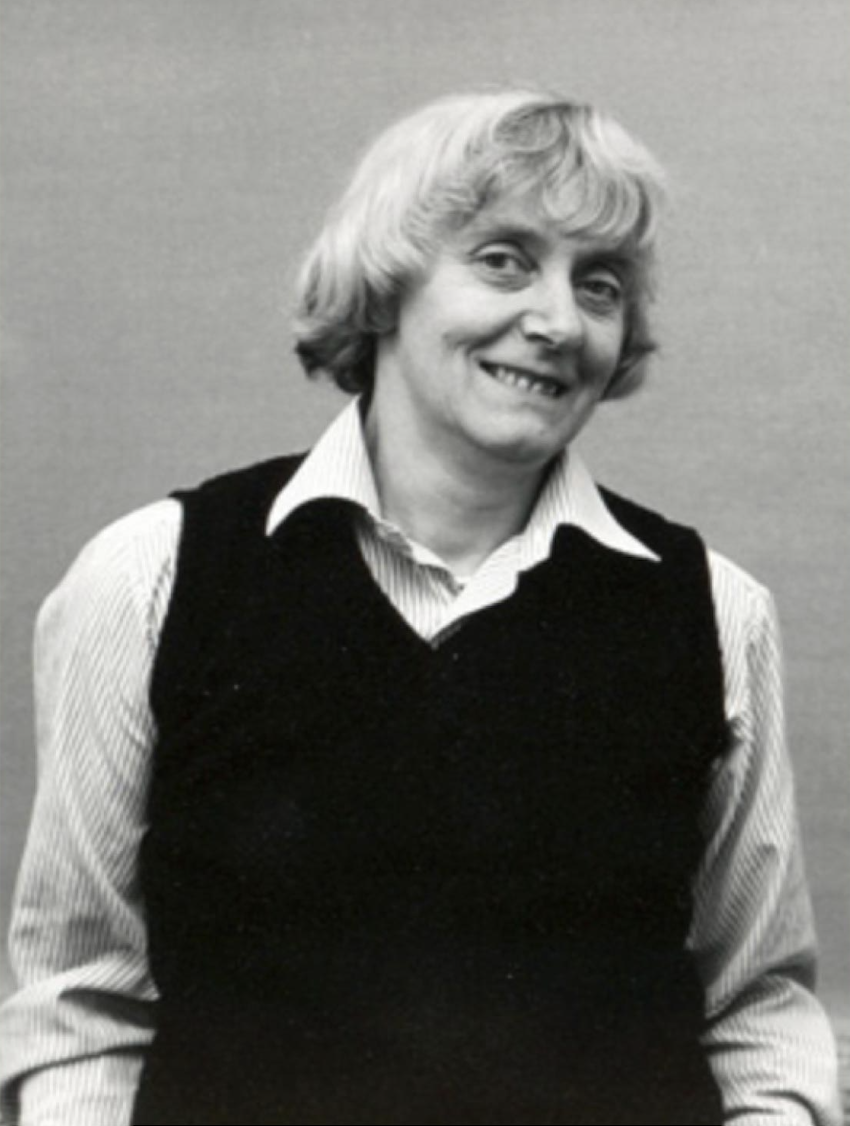
Credit: Jerestine Philomina Antony (own work), CC BY-SA 4.0
Maureen Duffy and the Necessary Act of Being Seen by Joe Ingham
Writer, poet, playwright, critic, activist: the words gather around Maureen Duffy but never quite contain her.
Duffy, who has died aged 92, belonged to that increasingly rare generation of artists for whom literature was not merely a profession or a means of self expression, but a way of intervening in the world.
Throughout a career spanning more than six decades, she wrote with intelligence, moral clarity and an unwavering curiosity about people pushed to the edges of society. At the same time, she fought tirelessly for the rights of authors, for gay liberation, for animal welfare and for the idea that culture itself is a public good worth defending.
Over the course of the pandemic I visited Duffy multiple times. I wanted to adapt her seminal work, The Microcosm (1966) for screen. During these visits she revealed more and more about herself.
Born in Worthing in 1933, Duffy's early life was marked by hardship. Her Irish father left when she was an infant, and her mother, Grace Wright, died of tuberculosis when Duffy was just fifteen. Those formative experiences of precarity, class division and loss would echo throughout her work, lending it both its fierce independence and its deep compassion.
Education, her mother told her, was the one thing nobody could take away. Duffy carried that lesson with her throughout her life. Her house was filled to the brim with books. She was always reading old books, new books, fiction, non fiction, poetry books. Books were everywhere, they surrounded her.
After studying English at King's College London, she taught in Italy and London before committing herself fully to writing. Her debut novel, That's How It Was (1962), drew directly on her experiences of working-class life and female independence.
But it was The Microcosm that secured her place as a cultural pioneer. Inspired by the Gateways Club in Chelsea, one of London's best known lesbian venues, the novel offered an unprecedented portrayal of lesbian lives at a time when such representation was almost entirely absent from mainstream British fiction.
In fact, she didn’t intend for it to be a work of fiction. She revealed to me during one meeting that she had wanted it to be an almost anthropological text but the publishers refused to release it, urging her to change names, identities, and make it something else, which, to an extent, she did. Duffy never framed her sexuality as a provocation. Instead, she treated it as an ordinary fact of human experience, insisting through her work that lesbian lives deserved the same complexity, joy and scrutiny afforded to everyone else.
Visibility, she understood long before the language around identity politics became commonplace, was itself a political act. To be openly gay in the 1960s was pioneering but carried significant risks both personally and professionally. Despite her growing reputation, getting the work published that she wanted out in the world remained a challenge.
Her work ranged restlessly across genres and subjects. Novels such as Capital (1975) captured the shifting social and economic realities of London, while Gor Saga (1981) imagined questions of humanity and animal consciousness through speculative fiction. She loved animals and hated cruelty towards them. She opposed vivisection, campaigned against the fur trade and explored humanity's relationship with animals in both her activism and her fiction.
There seemed to be no territory Duffy considered beyond the reach of literature. Yet writing was only one part of her life's work.
In 1972, she co-founded the Writers' Action Group, helping to lead the campaign for Public Lending Right, which ensured authors received payment when their books were borrowed from public libraries. It is difficult to overstate the significance of that victory, or the number of writers whose livelihoods have benefited from it.
For decades, Duffy challenged publishers, policymakers and governments to recognise that creative labour has value. She fought those battles not because they were easy, but because she believed writers deserved to survive.
To encounter Duffy's work is to meet a mind unwilling to accept conventional boundaries between genres, between species, between public and private life.
She wrote more than sixty books across fiction, poetry, criticism, biography and drama, continuing to publish into her eighties. Her final poetry collection, Wanderer, appeared in 2020, followed by her first children's book, Sadie and the Sea Dogs. She gave me copies of both.
Recognition came steadily: the Benson Medal from the Royal Society of Literature, honorary doctorates, the inaugural RSL Pioneer Prize, and the admiration of generations of younger writers, poets and filmmakers who saw in her a pathfinder, myself included.
Maureen demonstrated that literature can do more than reflect society, it can reshape it. She understood that telling the truth about one's life, especially when the world prefers silence, creates possibilities for others. Every writer who receives a library payment, every reader who finds themselves represented on the page, every artist who insists their work has value inherits something of Maureen Duffy's determination.I was so excited to show her the final film which was funded by Cheerio and voiced by Glenda Jackson. Glenda was full of praise for Maureen and it became the last film to be released during Glenda’s lifetime when it became an installation at Queer Britain, the country’s first LGBTQ+ museum, a permanent home to recognise and champion the work and contribution of trailblazers like Duffy.
Maureen Duffy refused invisibility. And because she did, countless others no longer have to.
Joe Ingham is a filmmaker from Blackpool, now based in London. His recent credits include EastEnders: 40 Years on Square (BBC), Ross Kemp: Lost Boys, Deadly Men (Crime + Investigation), and Soccer's American Dream (Vice TV).