

frame 83 July 2026
Hen, Mistress of Mayhem: A Portrait of Henrietta Moraes
By Darren Coffield

Darren Coffield has exhibited widely in the company of many leading artists including Damien Hirst, Howard Hodgkin, Patrick Caulfield and Gilbert and George at venues ranging from the Courtauld Institute, Somerset House to the Voloshin Museum, Crimea. His work can be found in collections around the world. In 2014 he was specially selected by the jurors of 100 Painters of Tomorrow as an artist who has made a significant contribution to the painting scene today. He is also the author of three cult books Factual Nonsense: The Art and Death of Joshua Compston, Tales from the Colony Room: Soho’s Lost Bohemia and Queens of Bohemia and Other Miss-Fits. He lives and works in London.
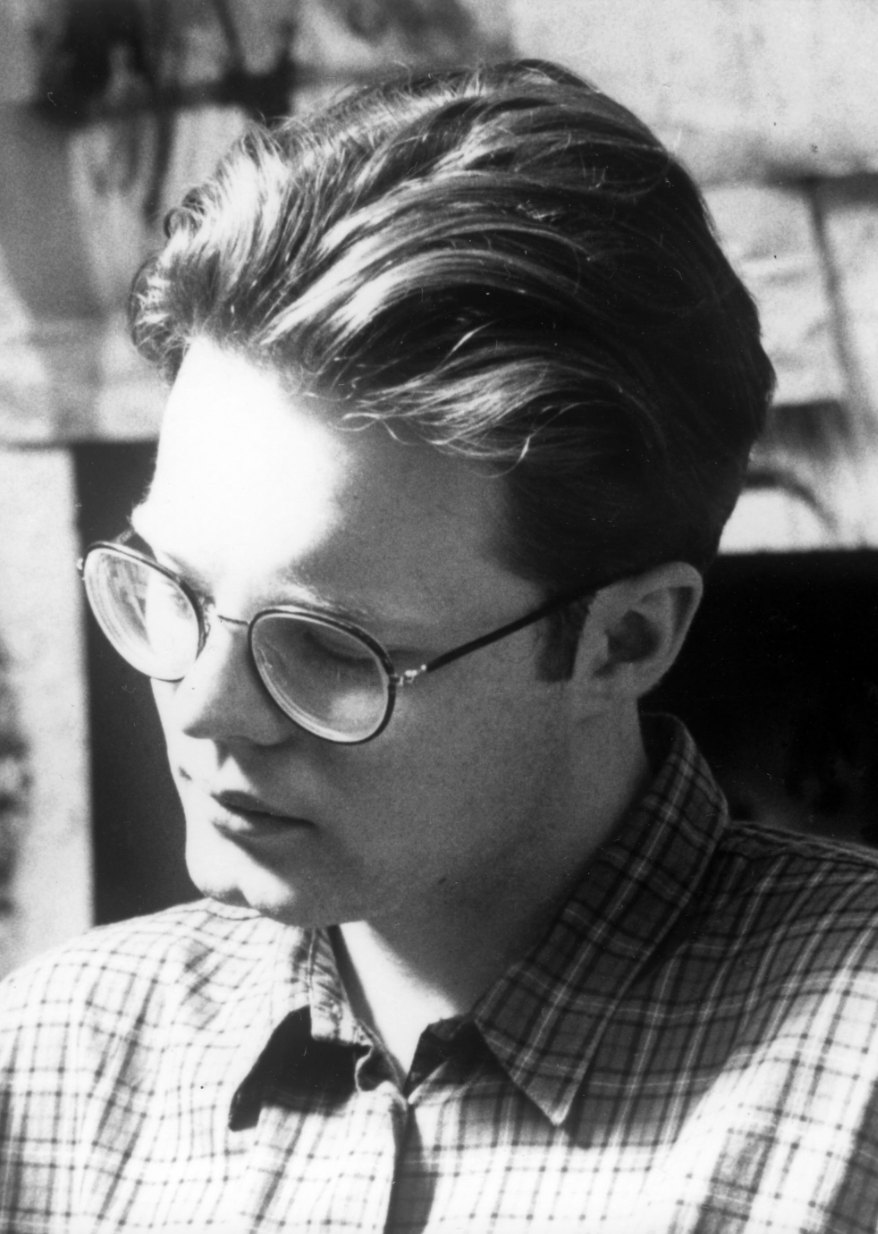
Hen, Mistress of Mayhem: A Portrait of Henrietta Moraes

Terrorised and Enchanted
Henrietta met a lot of kindred spirits in Soho who’d also had difficult childhoods. They knew that life wasn’t going to give them anything so they’d have to grab what they could with both hands. Perhaps it was this approach to life that made the French pub so loved by artists, writers, actors and musicians. When Hen first met Francis Bacon there they seemed to have an immediate rapport. She was overwhelmed by his disarming charm and cherubic features, his shiny rouged cheeks and pouting lips. His bleached blonde hair and lithe figure belied his age and, like many, she found Francis’ feminine features at odds with the violence inherent in his paintings.
Along with the baby-faced Francis, other regulars included John Deakin, the rubber-faced fashion photographer for Vogue, whose scruffy, hungover appearance seemed incompatible with his glamorous subject matter, and Britain’s first celebrity television interviewer, Daniel Farson, a sadomasochist with a penchant for wearing ladies’ lingerie. It was Daniel Farson who told me that Picasso and Francis Bacon stood apart from all the other painters in the twentieth century because they never let fashion encroach on their art and both were exceptional in their selfish single- mindedness. As for Henrietta, Daniel thought she was the most beautiful woman he had ever seen: ‘wildly attractive, fussing over her cigarette, with an arrogant upturned nose.’ He said she could stop people dead in their tracks and make them turn around, others were shocked by her unique mixture of caustic wit and beauty. As her friend, the pop star Marianne Faithfull, put it:
Henrietta was one of the great beauties of the 1950s – the epitome of that bohemian life that’s now gone. Her reckless intensity of spirit magnetically attracted people to her. Hen had friends from the gutter to the aristocracy whom she both terrorised and enchanted.
But we must remember that at this point in the early 1950s Henrietta and Francis Bacon were almost completely unknown. According to another friend and former model, Diana Melly:
Back then, Henrietta wasn’t really known for anything apart from being outspoken and part of the bohemian scene ... what was it about Henrietta that attracted so many artists to paint her? Well, she had incredibly striking features – almost too striking to be beautiful. There was nothing soft about her features at all. They were incredibly strong like her personality. People did talk about her in Soho as a beauty, formidably attractive and witty – she was very much part of the bohemian gang.
Henrietta became part of a new generation that fundamentally altered the character of bohemia into something brasher, drunker and more risqué, as the easy, convivial amiability of old bohemia gave way to the professional jealousy and infighting of the 1950s. At its core was a group of individuals who met at noon each day at the ‘Deep End’ of the French, and collectively formed the Monster Club. In Soho, one didn’t call someone a Monster just because they were annoying. Monsters don’t just behave badly; in fact their success is mostly due to their enormous charm. Along with Francis Bacon, John Deakin and Daniel Farson, Henrietta graduated to the exclusive Monster Club too. The label ‘Monster’ was an accolade and you had to fulfil some basic requirements before you could qualify. You didn’t call someone a Monster at random. A Monster was pretty special; they had to appear to be totally selfish and egocentric, only interested in their own importance and often plotting for their own gain. Monsters were completely unscrupulous, lacking in any modesty or restraint. They were often noisy, shouting down people cleverer than themselves. Eating and drinking with abandon, Monsters ignored the rules of good behaviour but were often refreshingly funny and made surprisingly good company. According to Marianne:
Hen inhabited a sort of enchanted space where the oddest, most unlikely things happened. She was the perfect muse for Francis Bacon ... she travelled on her own loopy groove, avoiding the straight world entirely.
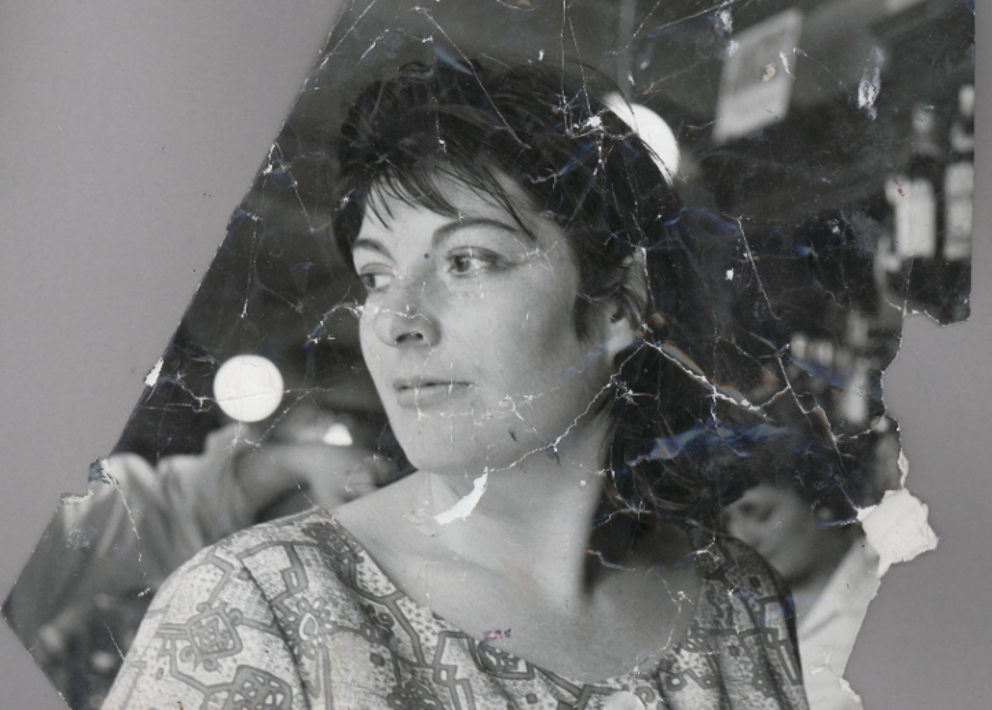
The Golden Age ...
Henrietta was an eighteen-year-old called Audrey Wendy Abbott when she began hanging out at the 100 club on Oxford Street. It had become a hip jazz venue where Diana Melly’s future husband, George Melly, often sang with his jazz band. There Hen met her first boyfriend, a jazz trumpeter, and lost her virginity to him before sleeping with all his friends (by her own admission, it never occurred to her to say no). A year later, aged nineteen, she met the thirty-five-year-old filmmaker Michael Law at the 100 Club whom she described as a ‘white-faced, pale-eyed medievalist with hammer toes’. He was almost twice her age and became the kind of father figure she’d never had. It was Michael Law who renamed Audrey Wendy Abbott, Henrietta, after his first girlfriend, Henrietta Swan. He then took her across Oxford Street from the 100 Club to Soho, a bohemian world she knew nothing about …
It was more by accident than design that Hen landed in the beating heart of bohemian Soho and wound up living on the same street as the unholy trinity of Soho drinking dens: the French, the Colony and the Gargoyle. For Henrietta, Soho was like a village, peopled by all these wonderful characters, such as Fred the Wings and No Knickers Joyce:
Sid the Swimmer delivered our logs. We knew every shopkeeper, every pub and club – Italian, French, Spanish, Polish, Swiss and African. The new Hi-Ho down the alleyway was full of deviant whores and their protectors. Big Jean and Stout Sally fought with dustbin lids on Friday evenings. And the Lagos Lagoon opposite our drawing-room windows was packed with gambling-crazy Africans.
For Hen, Soho was one big pantomime but as the local ‘People’s Poet’, Paul Potts, put it: ‘She was a pantomime and the whole of the year was Christmas’. Hen admitted they found her very easy to put up with, ‘particularly Francis. I never talked about painting, he loved that’. Francis Bacon did not tolerate bores.
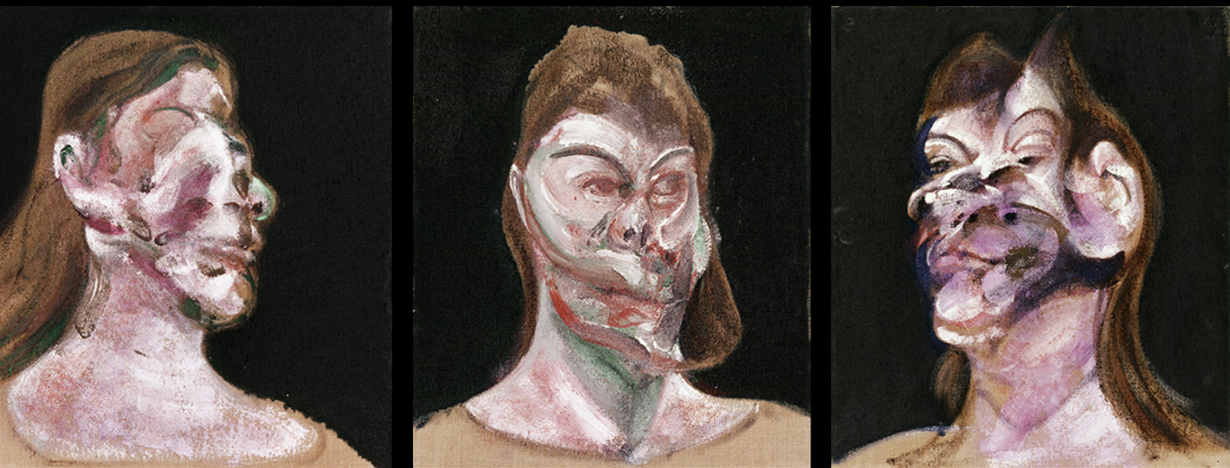
Hen, Mistress of Mayhem: A Portrait of Henrietta Moraes published by The History Press
Signed copies of the book available here: https://talesfromthecolonyroom.com/shop/