

frame 77 March 2026
The Two Roberts
By Bettina von Hase

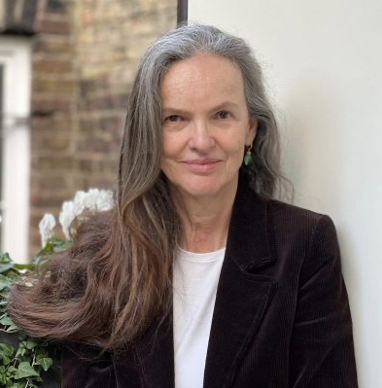
Bettina von Hase is a writer, journalist and art advisor. She founded her own company, Nine AM Ltd., which advises, and collaborates with, museums, artists, collectors, and companies worldwide.
Her journalism about art, culture and contemporary life has been published in many newspapers and magazines: The Financial Times and HTSI; The Telegraph Magazine; The Times Magazine; The Spectator; The New Statesman; Vogue UK; and the Italian magazine Panorama.
After university, she worked at Reuters as a foreign correspondent in Paris and Vienna. She was a television producer for CBS News America and ARD German TV in New York. She advised Tate Modern on its founding strategy; and was Development Director at The National Gallery. She speaks four languages: English, German, French and Italian.
She holds a Master’s in Modern History at Oxford (1978) and a Master’s in Creative and Life Writing at Goldsmiths, University of London (2024).
She is working on her first novel, Spring Ranch, a modern tale of love and deception between two people from different, patriarchal, cultures: the global contemporary art world and the polygamous Mormons of Utah..
The Two Roberts

I hadn’t heard of the Two Roberts until my friend, literary agent Clare Conville, suggested I accompany her to visit their eponymous exhibition at Charleston in Lewes, East Sussex. Robert MacBryde and Robert Colquhoun: Artists, Lovers, Outsiders is on until 12 April 2026. ‘You know about art, you’ll love it,’ she said when we met at Victoria Station to board the train, pressing a book by the writer Damian Barr into my hand. It bore the title The Two Roberts. The artists had a home and studio in Lewes from 1947 to 1949, close to Charleston Farmhouse, where Duncan Grant and Vanessa Bell lived and assembled the Bloomsbury Group.
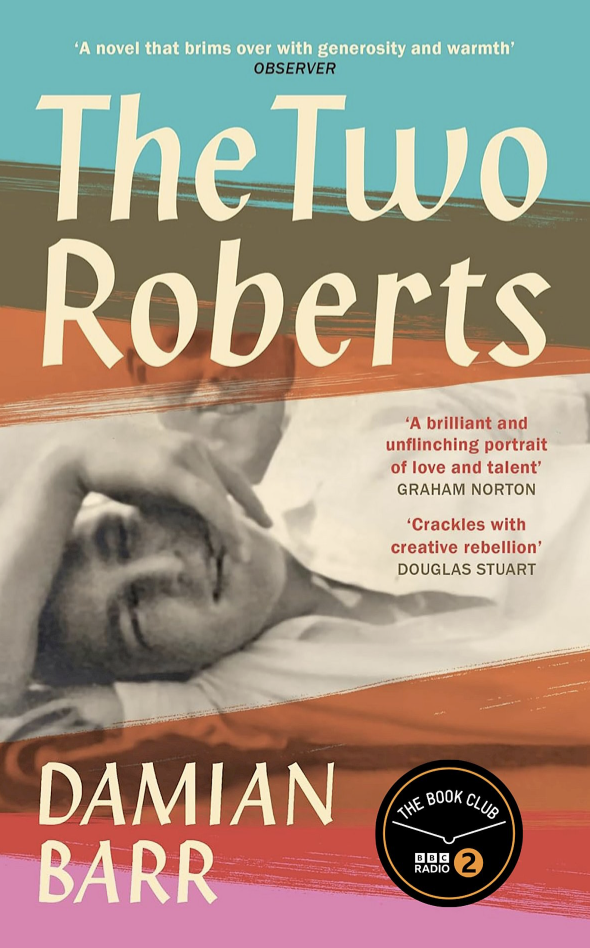
The Two Roberts, Damien Barr, 2025
The book is an intimate re-imagining of the lives of these two Scottish painters, Robert MacBryde (1913-66), and Robert Colquhoun (1914-62), who found fame and glamour in the bohemian art world in London in the 1940s and 50s, only to disappear without trace thereafter. Billed as a novel, it transports us vividly into their domestic and working lives. Damian Barr also curated the exhibition, his first, with over 100 pieces, including paintings, drawings, lithographs, monotypes and archival materials, some never seen before.
The show throws light on two restless souls who lived with significant financial and societal pressures at a turbulent time in the last century. It is the first time that the true relationship between the two Roberts has been depicted with honesty. There was no such transparency in the last exhibition dedicated to them, in 1962. The societal taboos of their time caused them to live in the shadows; they could not show their love for each other in public and had judiciously to protect their private space.
Robert and Bobby met in 1933, in their first term at the Glasgow School of Art, and became partners in love and work. Homosexuality was illegal - it was only partly decriminalised in England in 1967, and in Scotland as late as 1981. This was the dangerous backdrop to their careers and lives, further heightened by the outbreak of World War II in 1939. After five years of study, from 1933 to 1938, they graduated from the Glasgow School of Art; Robert came first in class, Bobby a close second. As a result, the school awarded travelling scholarships to Europe to both. The assessor wrote: ‘their work was so equal that great difficulty was found awarding the Travelling Scholarship…recognising they would only split the award, the GSA’s Chairman of Governors made an extraordinary decision: he personally funded another scholarship.’
They visited the capitals and great museums of Continental Europe, sampling the food, wine, sailors and waiters along the way. In accordance with the terms of their scholarships, they sent notes, sketches and drawings to their art teacher, Ian Fleming (no relation), with whom they kept in contact until the end of their lives. He realised that they were ‘one organism’, as Wyndham Lewis, their friend and sometime neighbour, wrote in 1947. Fleming made an atmospheric painting of them, The Two Roberts: Colquhoun and MacBryde, 1937-38, Fig 1, which celebrates their influence on each other, personal and professional. It was an act of great bravery at the time for both Fleming and the subjects of his portrait.
In it, Robert sits on the left, well-dressed and (clearly) well-hung; he looks like an odalisque, an object of male desire, gazing into the far distance, captured in his own world. Bobby sits on the right, wearing a shapeless painter’s overall – the Glasgow School of Art uniform. His right hand curves downwards. You cannot see them touching, but the inherent drama is captured because you know they do. The way they sit means their legs actually do touch; Bobby’s hand is nestled on Robert’s left leg, fingers just out of view. The portrait gives clues about the nature of their relationship without revealing their secret.
In the work, Robert is the Beloved, and Bobby the Lover, which are the roles they played out in real life. Both came from working-class families in Ayrshire – MacBryde from semi-rural Maybole, famous for shoemaking, and Colquhoun from Kilmarnock. They were both the oldest of three, each with a brother called John and each with a younger sister. Yet they were startlingly different, and the consequent tensions between them fuelled their creativity. ‘Each made the other a better artist;’ says Damian Barr in a recent telephone interview with me, ‘each believed in the other, pushed the other, and made work about the other.’
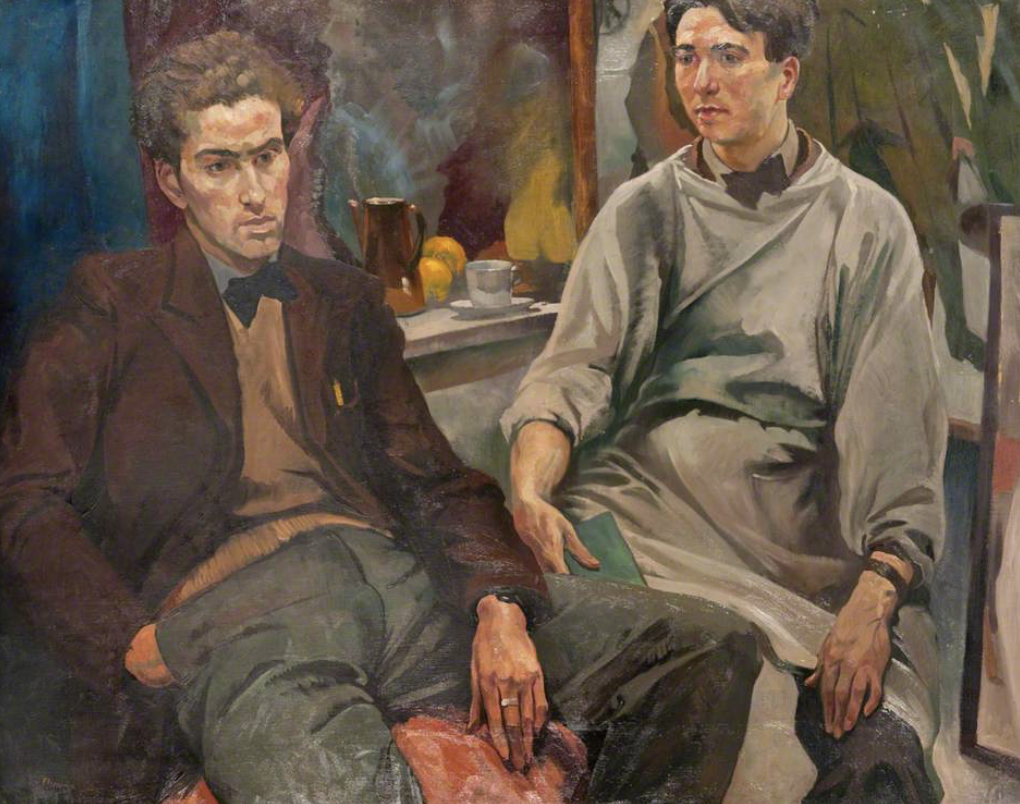
Fig 1. Ian Fleming, The Two Roberts: Colquhoun and MacBryde, 1937-38.
While every effort has been made to identify and contact the copyright holder of this work, we would be grateful for any information and will gladly make any necessary amendments
They shared digs in Glasgow, at 3 Botanic Crescent in the city’s affluent West End. Robert was shy and introverted, Bobby more of an extrovert. This is visible in several drawings – see, for example, Fig. 2. Colquhoun’s Portrait of Robert MacBryde, c. 1937-38, Fig. 2, is a charming study in pencil, on brown paper, of a confident young man. The vigorous cross-hatching shows Bobby’s face catching the light, a tender expression in his eyes. In MacBryde’s Young Man, Self-Portrait (not dated), the artist depicts himself as a man-about-town, relaxed and confident, with a hint of swagger. Bobby uses the expanse of white paper, expensive at the time, to draw his jacket in outline, harmonising with the striped shirt he is wearing.
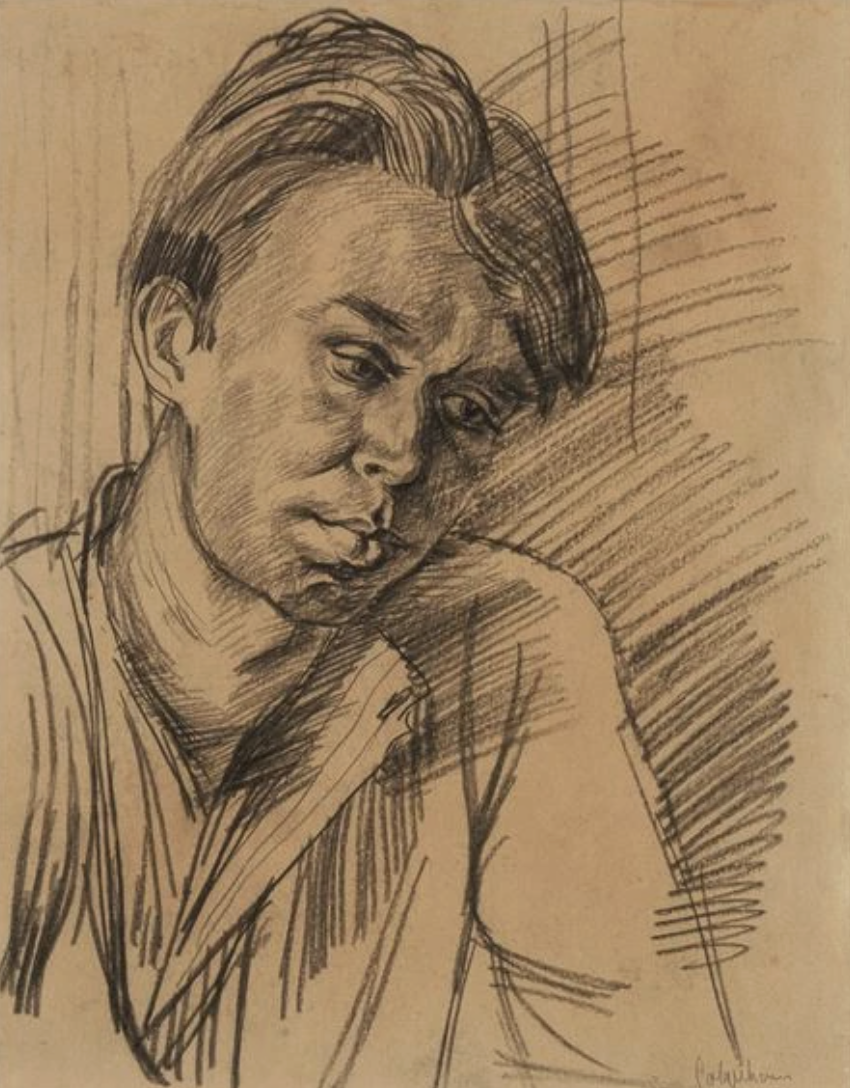
Fig 2. Robert Colquhoun, Portrait of Robert MacBryde, c. 1937-38.
Contrast those early drawings with Colquhoun’s haunting and introspective self-portrait, The Army Haircut, 1940, just three years later. Robert was called up and spent two years driving ambulances by day and painting at night, unlike MacBryde, who was exempted from service because he’d had tuberculosis as a boy. The drawing shows the psychological ravages of war: Robert looks emaciated, with sharp cheekbones, his hair hacked off, eyes staring into the abyss. Their separation, after a bucolic six months in Europe in 1938-1939, was a shock to their system and a signal that they couldn’t thrive without each other.
However precarious and insecure their existence, the two Roberts had a run of luck in meeting men who would help them along the way; these became mentors, friends, and occasionally lovers, although the two Roberts’ main focus was always each other. In 1941, MacBryde writes to Fleming: ‘Lately I have met many interesting people like Cyril Connelly, editor of the magazine Horizon and the young millionaire who backs the magazine.’ The meeting with the rich Peter Watson was life-changing. He helped bring Colquhoun back from the war in 1941 and set up the two men in a studio at 77 Bedford Gardens in Notting Hill. He introduced them to a louche London art scene in which they flourished, and put them in touch with the powerful Lefèvre Gallery where they exhibited alongside other Scottish artists as part of the Neo-Romantic movement, an artistic response to the agony of war.
In short order they became well-known and well-connected, mingling with the Bohemia of the day. This included writers and poets like Elizabeth Smart, George Barker, Dylan Thomas, and the artists John Minton, John Craxton, Lucian Freud and Francis Bacon. However, their most important artistic influence came from another quarter. They had visited Europe, but now Europe came to them in the shape of Jankel Adler (1895-1949), a Polish-Jewish émigré, avant-garde painter and print-maker who moved into a studio above them in Bedford Gardens in 1943.
Adler knew Pablo Picasso and Paul Klee and had learned the off-set drawing technique from the latter, which he now shared with the two Roberts. Jankel Adler self-portrait drawing (not dated) depicts the grave face of a Mitteleuropean artist whose world has been destroyed. Adler engaged them in European Modernism and taught them to ‘look inside themselves’, to explore their emotions and Celtic roots, rather than merely observe the world around them. Soon, Bobby and Robert were calling Jankel ‘the Master’, and their work became noticeably more angular, freer, less representational.
Colquhoun concentrated on the human figure, painting ordinary women who would ‘never approximate to the Venus de Milo, but therein lies their interest,’ as he told Ken Russell, the film maker, in a 1959 BBC film for the flagship art programme Monitor. Woman with a Goat (1948); Girl and Pig (1953); and Woman Ironing (1958), demonstrate his preoccupations. For someone as shy and withdrawn as Colquhoun, it is surprising how dynamic these women are: strong, perhaps angry with their lot, but never submissive. Even the pig has a feisty personality.
MacBryde’s artistic strength was still life. A full wall in the exhibition is dedicated to them; they are the works I would most like to take home. His use of colour is dazzling in its virtuosity, while enabling a glimpse into the artists’ domestic life. Bobby was the administrator and cook in the relationship. In Still Life with Calf’s Head (1948), and in Still Life with Fish Head (1947), you can see the simple dishes he makes. The cow’s head, about to be made into a soup, has an air of resignation, filled with a sly humour. In one part of the exhibition there is a still life by each artist, one above the other: Colquhoun’s Still Life with Shell (1930-1940s,), at the top, and MacBryde’s Fruit on a Caucasian Cloth (c. 1944), below. If you compare these two works, Bobby’s wins the contest.
Robert did nothing but paint, while Bobby had much less time to work due to managing their household. This led to tensions and explosive rows, often fuelled by the alcohol both men used to alleviate stress. The trauma of the Second World War and the undeclared societal war on men like them, as well as their financial and emotional instability, severely oppressed them. But even in adversity they remained devoted to their work.
‘We must be certain to create our legends before we die’, Bobby said to Robert in 1940, and for a brief moment, they did just that. But we see the extent of their deprivation by the time we come to Ken Russell’s excellent 1959 12-minute film of them, Scottish Painters, Fig. 3, shot in black and white, which closes this gem of a show. It is a year after Robert’s solo exhibition at the Whitechapel Gallery in London. They are now living in Kersey, Suffolk, in a ramshackle cottage. The footage is riveting, but painful to watch. The art circus has moved on to abstract expressionism and pop-art, and has left them behind. We see them arrive home on a horse and cart unloading no more than a few blank canvasses. In another scene they walk between their separate studio spaces, commenting on each other’s work.
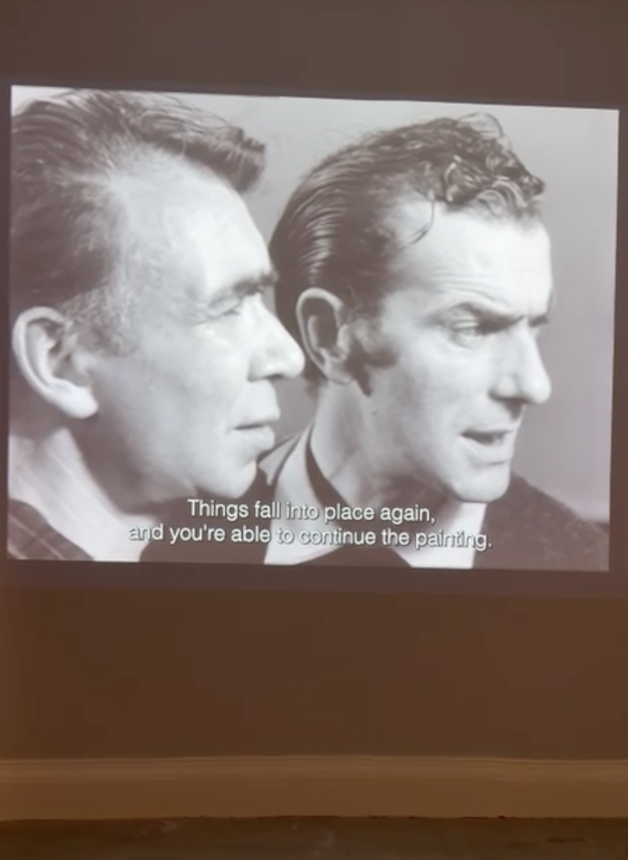
Fig 3. Still from Scottish Painters, a 12-minute film by Ken Russell, 1959.
During the film, one of Colquhoun’s hands has an alcoholic tremor; he holds it with his other hand to keep his brush steady. Their togetherness and isolation from the world are palpable. Robert died of a heart-attack in 1962, in Bobby’s arms, on the eve of a come-back show. MacBryde’s life was never the same again. He was cared for by friends like Elizabeth Smart, but his creative life was over. In 1966, when dancing a jig outside a pub in Dublin, he was hit by a car and killed, the driver never found.
Their tragic end has a haunting poignancy; but I left the exhibition with a sense of joy. Their lives were artistically fulfilled: their talent recognised, their dedication complete. They lived as they wanted: untouchable iconoclasts. In a world full of smoke and mirrors, they remained true to themselves.
Email: bettina@nineam.co.uk
Website: www.nineam.co.uk