

frame 76 February 2026
Gerry’s Pompeii
The story of how one man’s secret work became an art world sensation, and how curator Sasha Galitzine now strives to save it…
By Patrick Cash

Patrick Cash is a British-Irish writer living in London. He was a winner of the Felicity Bryan New Voices 2024 and Hachette UK Grow Your Story competitions for his work-in-progress novel, Fireworks. His short fiction has won a Creative Future Award, and been published in The London Magazine and Fictionable.
Alongside his own writing, Patrick is Editor-at-Large at CHEERIO.
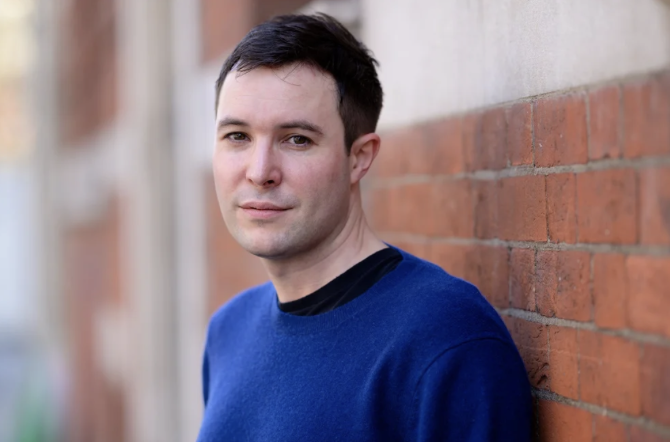
Gerry’s Pompeii
The story of how one man’s secret work became an art world sensation, and how curator Sasha Galitzine now strives to save it…

All photos (c) by Jill Mead, courtesy of Jill Mead & Gerry's Pompeii.
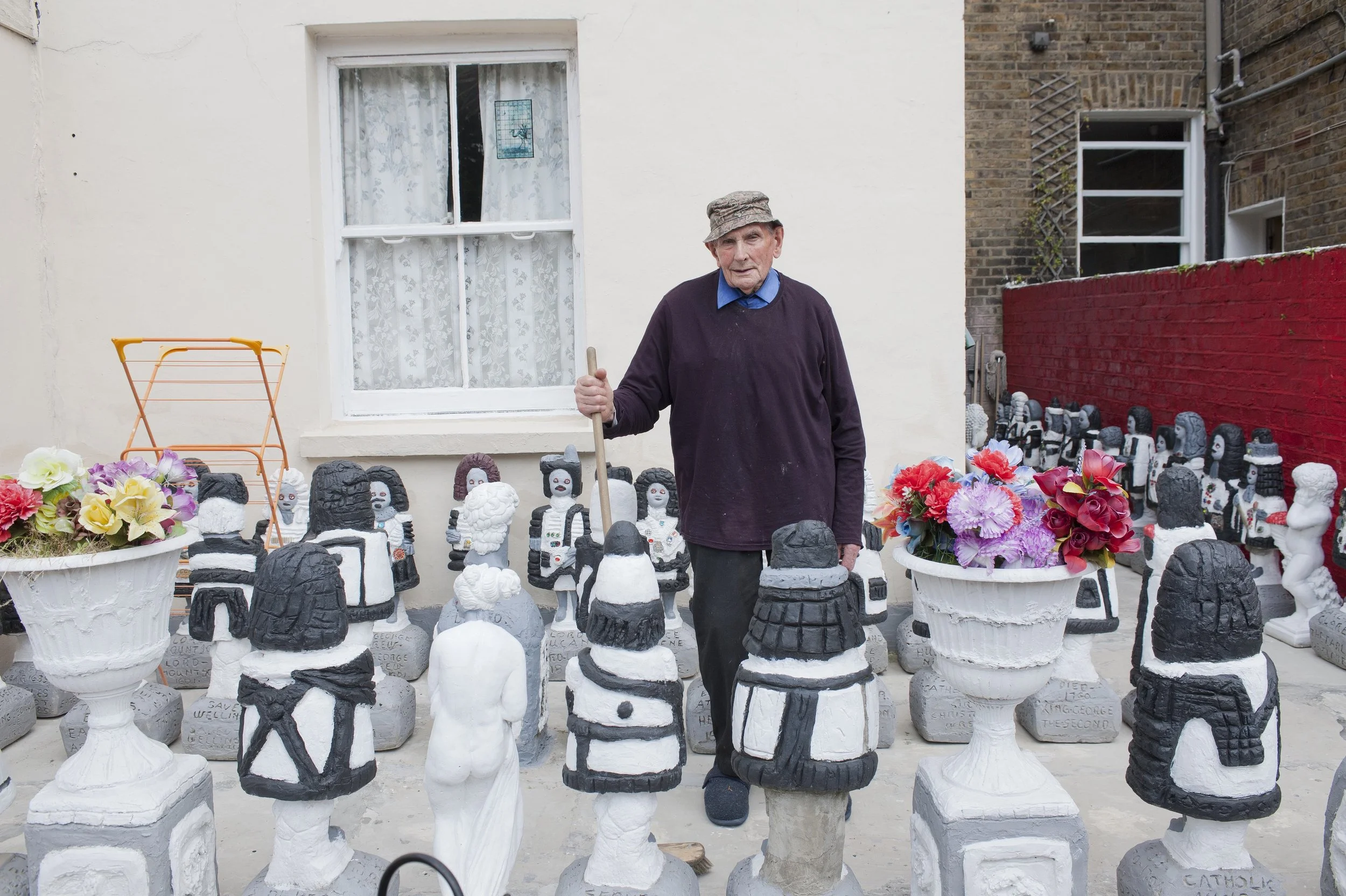
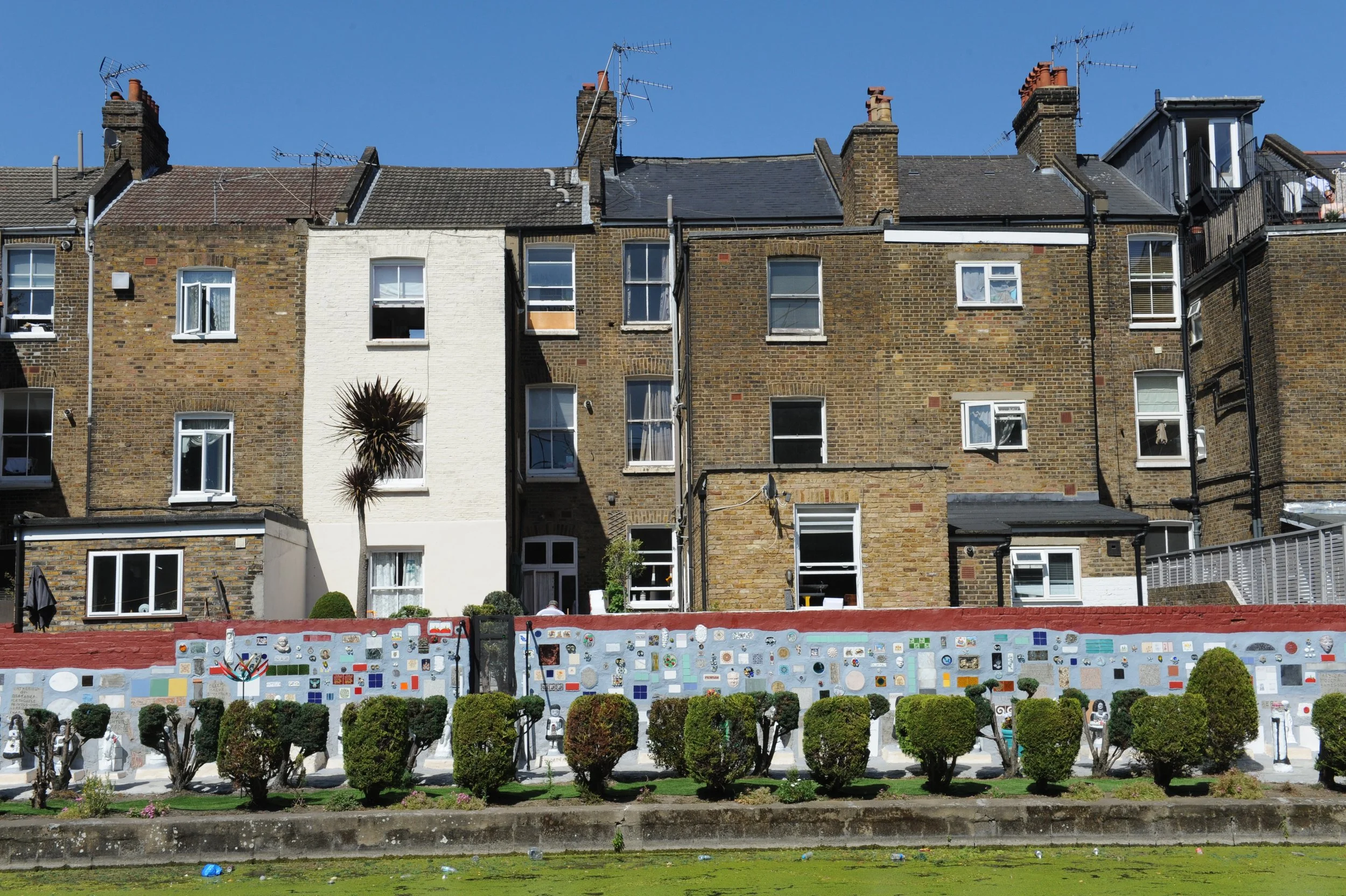
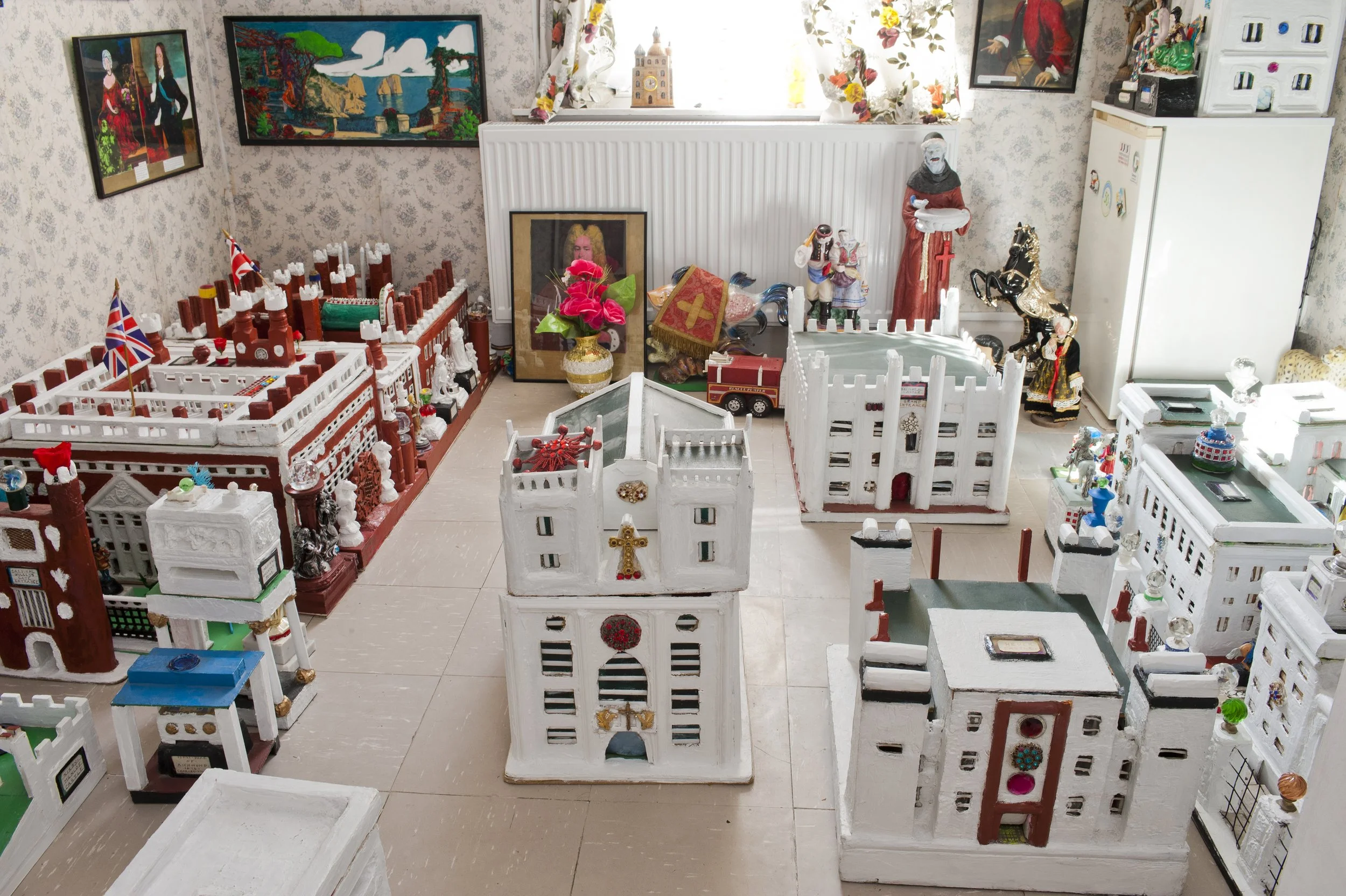
In 2017 Sasha Galitzine was working as a freelance art curator, when her friend Roc Sandford said she had to meet his neighbour. She came to an address off the Harrow Road in West London and found a shy 81-year-old Irishman named Gerry Dalton wearing a bucket hat. Walking into his house, she was one of the first people to see thirty years of Gerry’s sculptures, filling every room and stretching down the garden, culminating in a giant tile artwork along the Regent’s Canal.
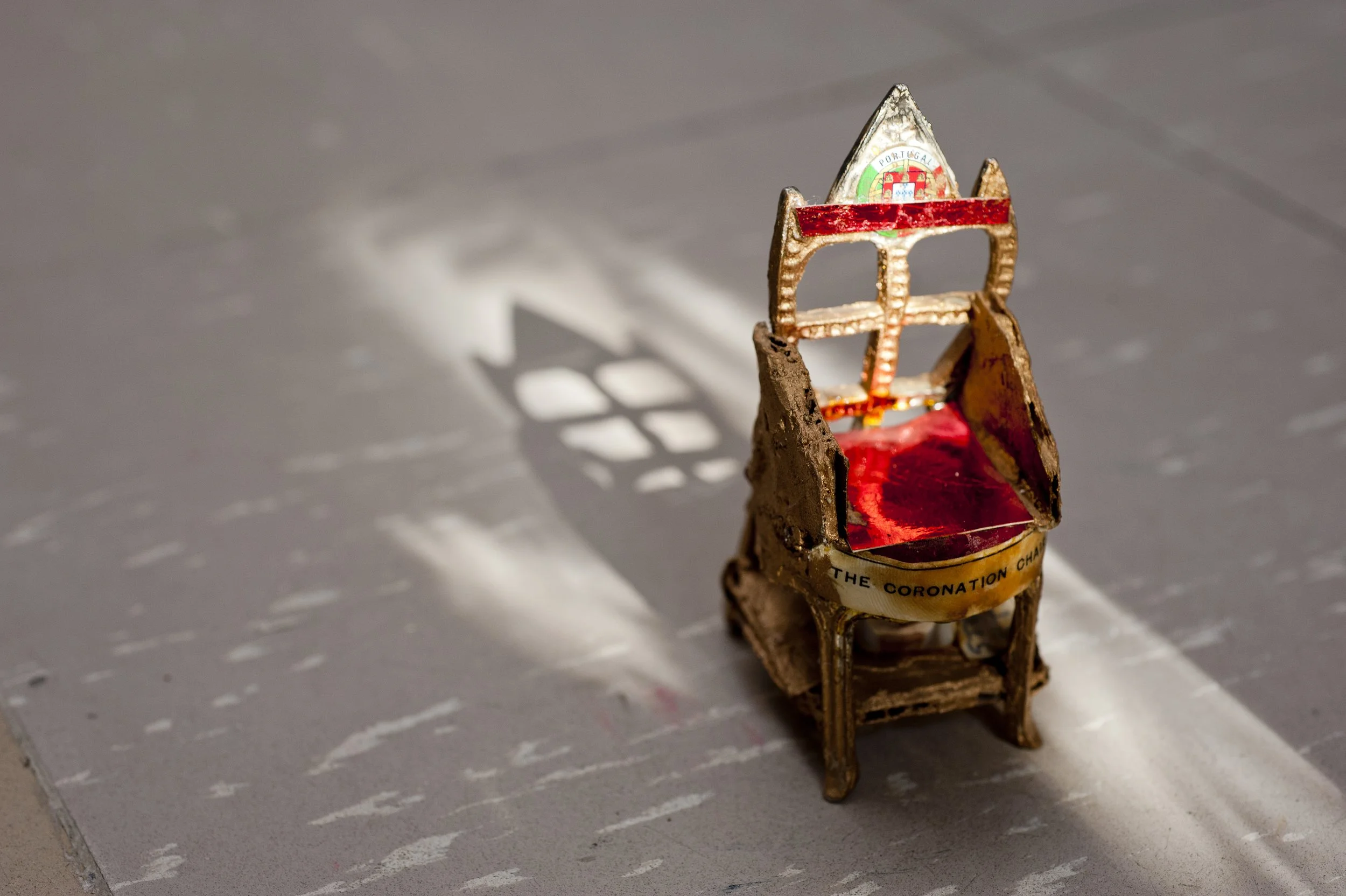
‘I was like “whoa, what’s going on?”’ says Sasha. ‘It was so surprising walking into a small terrace house with no expectations. It was totally a museum. Everything had been thought about, every tiny space considered. The coronation chair, Her Majesty’s bed with candle holders, he opened up Buckingham Palace and he’d cut out loads of pictures and stuck them to the walls, like Rubens and Titians, ceiling murals. Gerry was like, “you’re a bit overwhelmed, aren’t you?”’
Sasha says she went back several times, noticing more detail on each visit and befriending Gerry. He was born in 1935 in Athlone and, not being naturally cut out for the Irish farming game, he’d come to London with his cousin at 23. He worked for years as a postal porter by night at Paddington Station, but retired early due to asthma. When his partner Nelly died in the 80s, he began making the art.
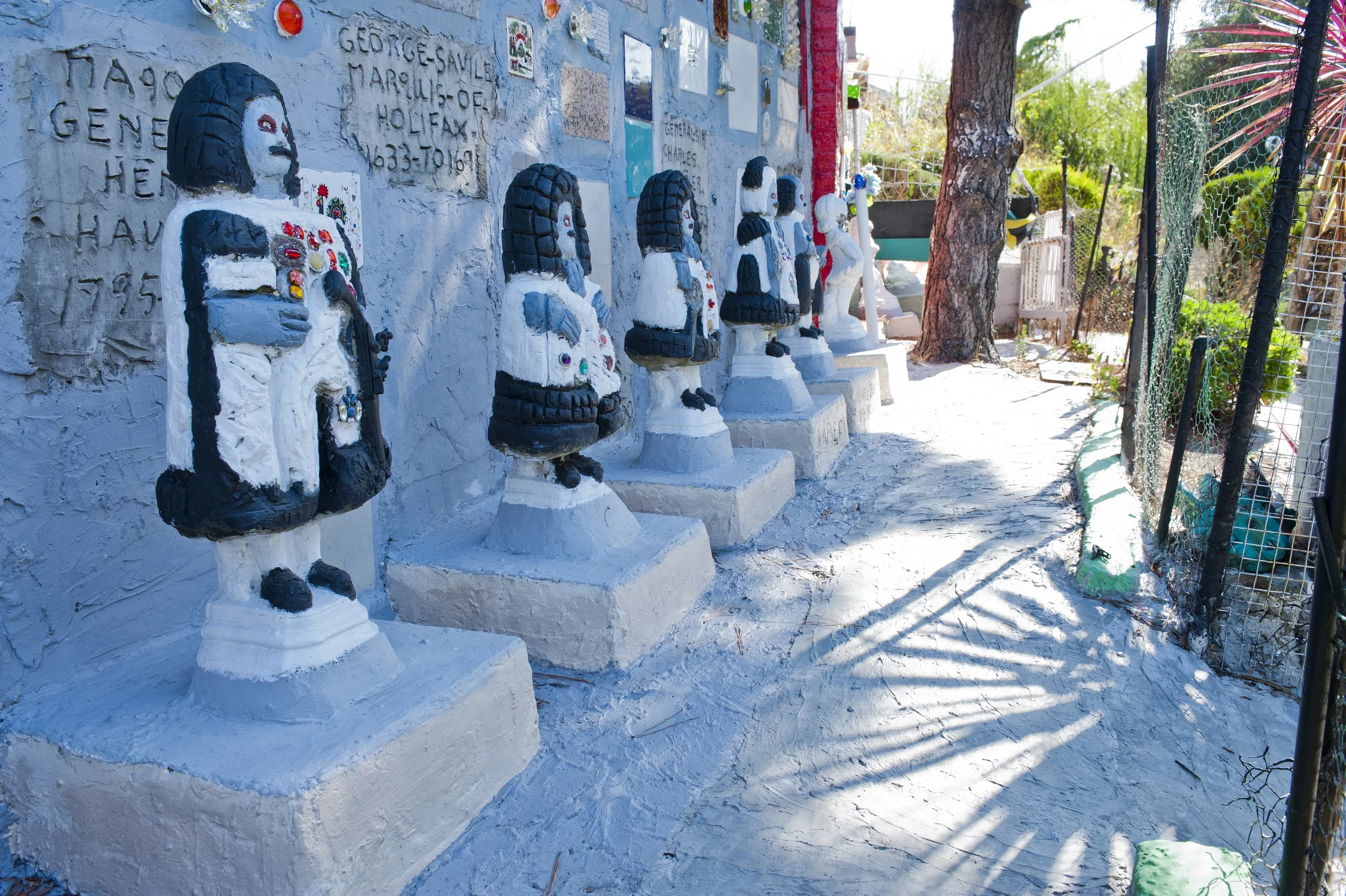
‘No one ever saw him making any of it,’ says Sasha. ‘I think he did it at night. His neighbours Nick and Alison’s house came with this strip of land by the canal and no one went back there. It was totally rubbish: trash, clutter, overgrown. Gerry cleared the whole thing with his friend, Satoshi Kitamura. He planted Leylandii and let them grow up to hide what he was making. Then about five years before he died, his confidence grew, and he cut them in half and revealed the tiles. They were his piece de résistance.’
The house was completely given over to art, with almost no furniture other than a bed and a kitchen table. You went into the back room and found Hampton Court and Windsor Castle. Sadly, Gerry died two years later in 2019, leaving the flat and garden to revert to the housing association. The clock was ticking before his lifetime’s work was removed. Gerry had only allowed one article to be published in his lifetime in World of Interiors. In it, he’s quoted as saying, ‘I guess it’s more of a museum than a flat, really.’
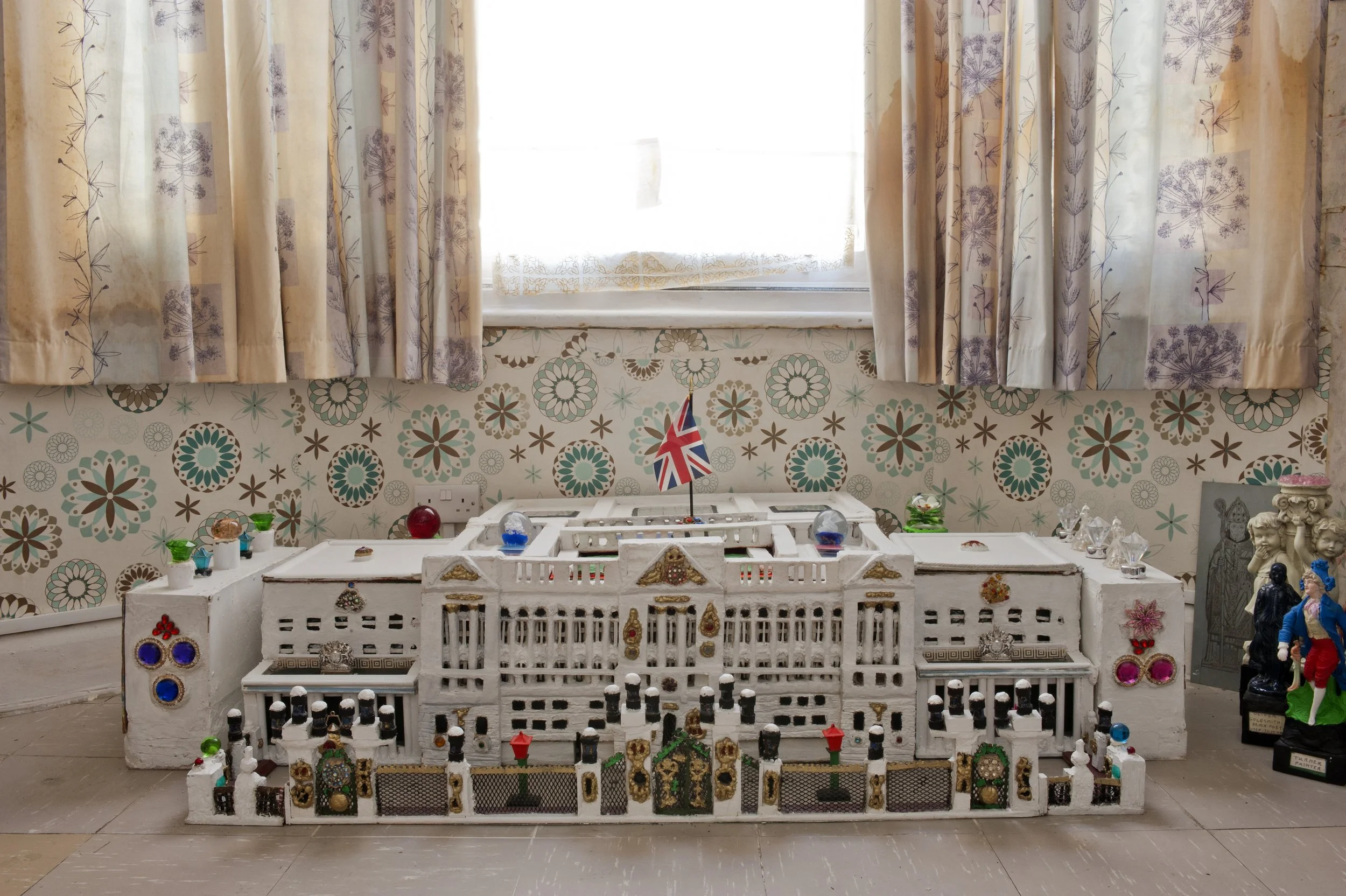
This gave Sasha the license to pursue what was fast becoming her dream: save the flat and the art Gerry had made. ‘It sounded like he does know that it’s a museum,’ she says. ‘The more people I showed, the more people were obsessed with it. It can’t be displaced because that ruins half the magic of it. I didn’t think it’d be possible to go to the Housing Association saying, “we need the property back.”
Sasha called in all her connections, showing nine hundred people around over two months. Everybody was moved by what they saw. A chain reaction sparked and a dazzling array of art world luminaries passed through Gerry’s posthumous door: the gallerist Hannah Barry; the artist Richard Wentworth; Hans Ulrich Obrist, Director of the Serpentine; Erica Bolton; Jarvis Cocker.
‘Each person I showed got more excited,’ says Sasha. ‘Everyone knew someone that could help, a photographer, a journalist, a teacher in art school… It was the most phenomenal chain of goodwill that I think I’m ever going to experience in my life. And then I called the Mayor of London’s office as they’d recently set up this Culture at Risk department. They immediately got involved and we held all these meetings in City Hall with the National Trust, the Art Fund, the Arts Council.’
At this point, Gerry’s went viral. First The Guardian picked the story up, then The Telegraph, The Times, The Sun. Campaign letters were sent to the housing association, Genesis Notting Hill, including signatures from the likes of Nicholas Cullinan (now Director of the British Museum), Jeremy Deller, Anthony Gormley and Tristram Hunt (Director of the V&A). ‘And then Dorothy Cross, Kathy Prendergast, Michelle Deignan and Patrick Murphy sent it around all the Irish artists,’ says Sasha. It seemed the campaign was bearing fruit when Genesis Notting Hill agreed to sell Gerry’s flat for half a million pounds. Through fundraising and institutional pledges, Sasha’s team had raised £300,000 and were on track to hit their target – when, in 2020, Covid-19 hit the world and the entirety of the UK went into a national lockdown.
‘I was shielding at home,’ she says. ‘My Dad was just about to have a triple heart bypass, my Mum was really unwell. Suddenly, I get this text from one of Gerry’s neighbours, saying “why are you breaking lockdown?” I was like, “what are you talking about?” And they said someone’s moving all the statues out of Gerry’s flat. It turned out Gerry’s family had changed their mind.’
Sasha called Justine Simons at the Greater London Authority and begged for help. But despite interventions from the GLA, the family, for unknown reasons, no longer wanted to preserve the work. ‘I was stuck in lockdown on a Sunday,’ says Sasha. ‘It was the worst day of my life.’ She still doesn’t know where the house sculptures are.
However, no one could take the tiles created along the canal. Sasha has set up a charity named Gerry’s Pompeii (‘they’ll be astonished what they find in my garden in years to come,’ Gerry is quoted as saying, ‘it’ll be like Pompeii’) and now leases the strip of land from the Canals & Rivers Trust. She hosts events and commissions artists to keep Gerry’s legacy alive and the spirit of community that he embodied. ‘He wasn’t a trained artist,’ she says. ‘And he didn’t have much money, so he made everything from found materials. It comes from the community. Even if people on the road didn’t know they were helping Gerry, them leaving him alone to do it, and not making him embarrassed, and giving him food and being his friend, basically enabled him to do it.’
She laughs.
‘He was like the epitome of a good neighbour.’
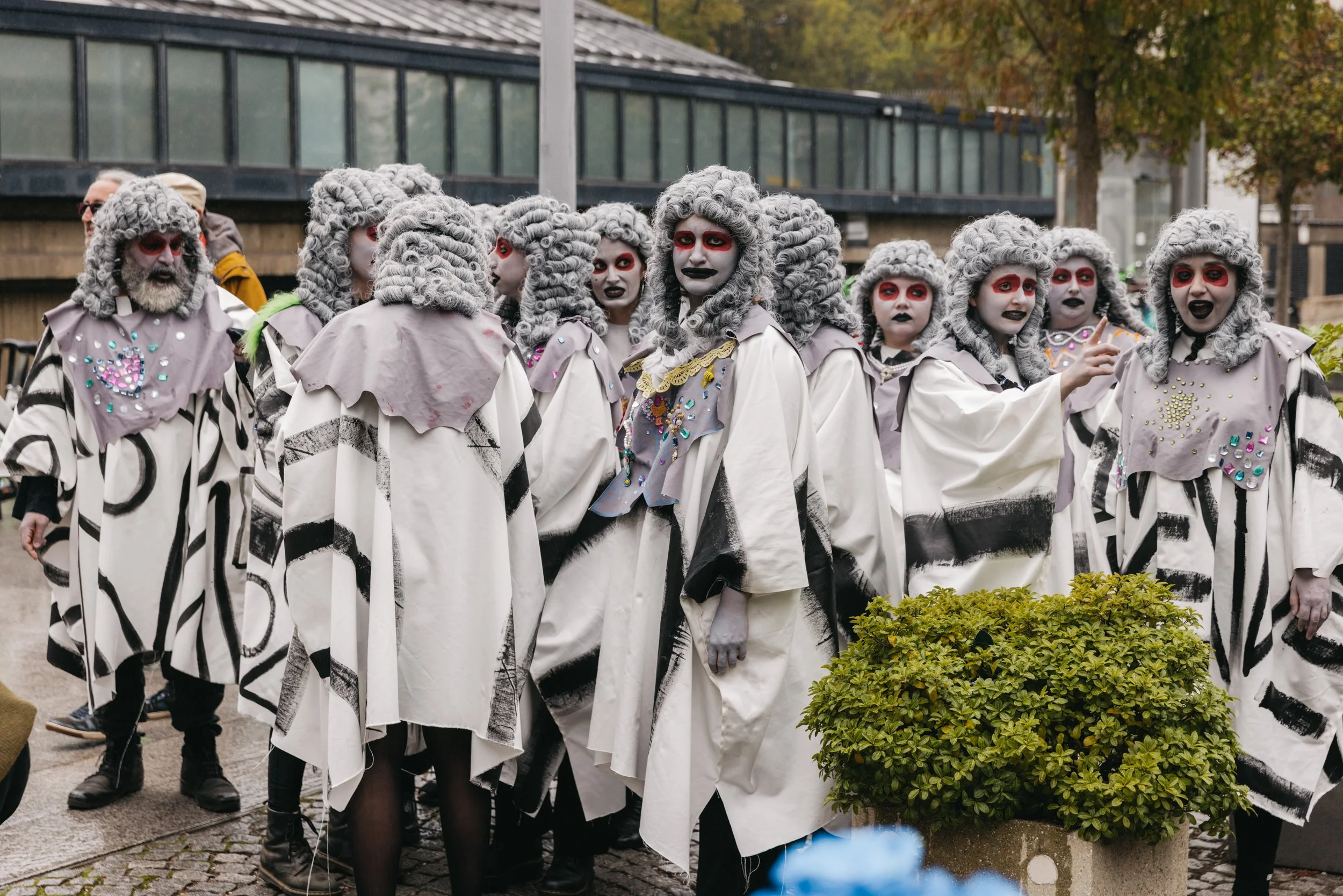
Photo above credit: Lorcan Berg & Gerry’s Pompeii
Gerry’s Gongoozling (pictured above), when the statues returned to Gerry’s garden. An example of the events organised by Sasha as part of Gerry’s Pompeii: https://www.gerryspompeii.com/
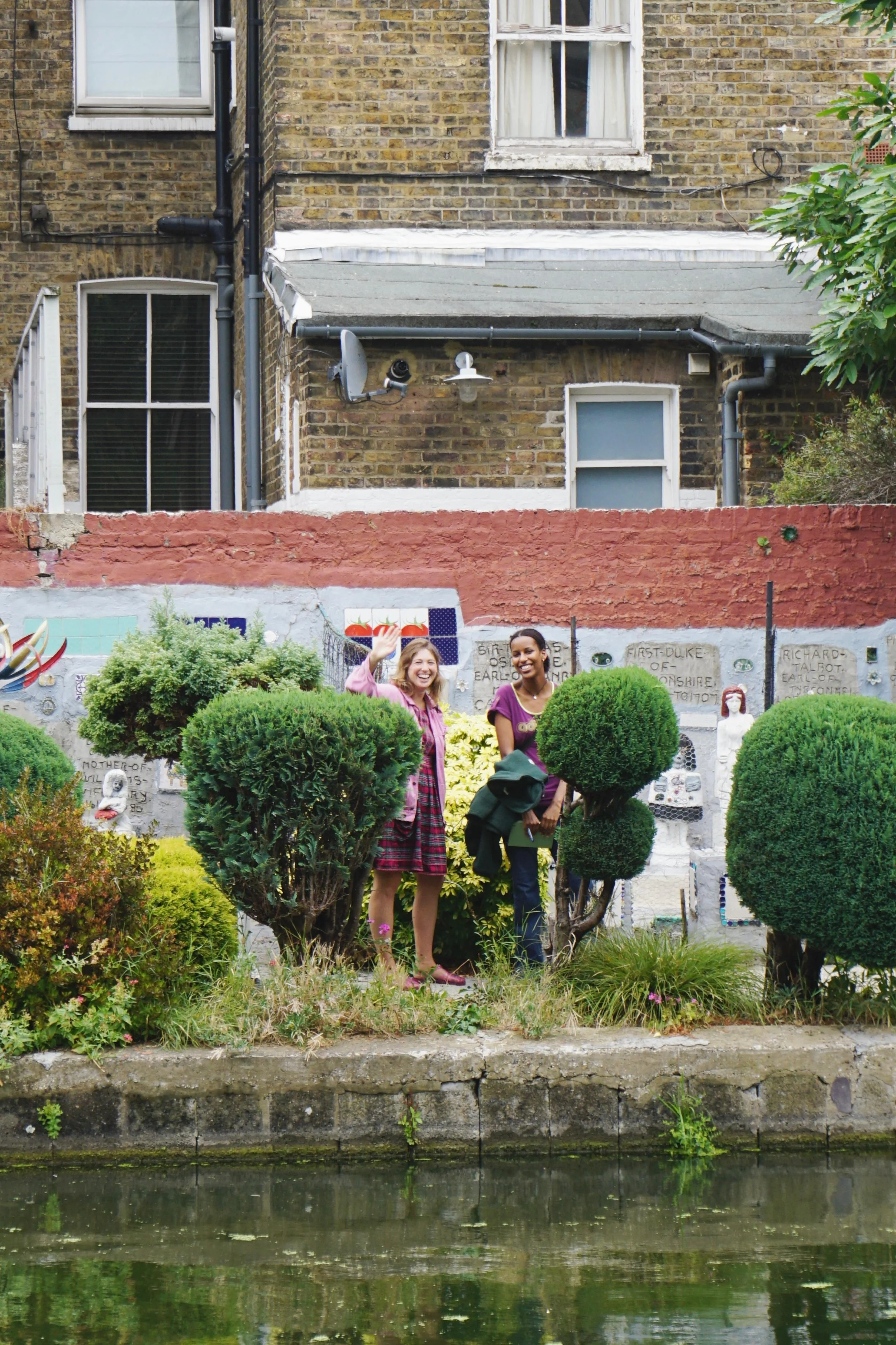
Sasha Galitzine (above, L) with Gerry’s Pompeii intern Beth Kuhepa. Photo (c) by Jill Mead, courtesy of Jill Mead & Gerry's Pompeii