

frame 75 January 2026
Amos Poe and the Lying Down Diaries
by Jane Rankin-Reid
Tasmania-based writer, curator and art critic Jane Rankin-Reid is a writer of fiction, biography, memoir and critical essays. Her essays from the late-1980s on Jean-Michel Basquiat have been widely re-printed, and her work as a correspondent and columnist has been published in the press around the world. She has previously published two Frames with CHEERIO: Balenciaga On My Mind and Belonging Elsewhere.
Amos Poe and the Lying Down Diaries
New York film maker and writer Amos Poe has died at the age of 76 on December 25th 2025, from an aggressive colon cancer. His many films, from Blank Generation, Unmade Beds, Alphabet City to one of my personal favourites; Triple Bogey in a Par Five Hole, all use the city of New York as a character, rather than simply as a backdrop. Poe was a passionately energetic artist, one of the originators of 1970s and early 1980s No Wave cinema, a cinematic movement of rebellious discord aptly befitting the downtown New York scene in those years. He was always keen to explore the widest possible sources of inspiration; the poetic mess of improbabilities are well found in his films.
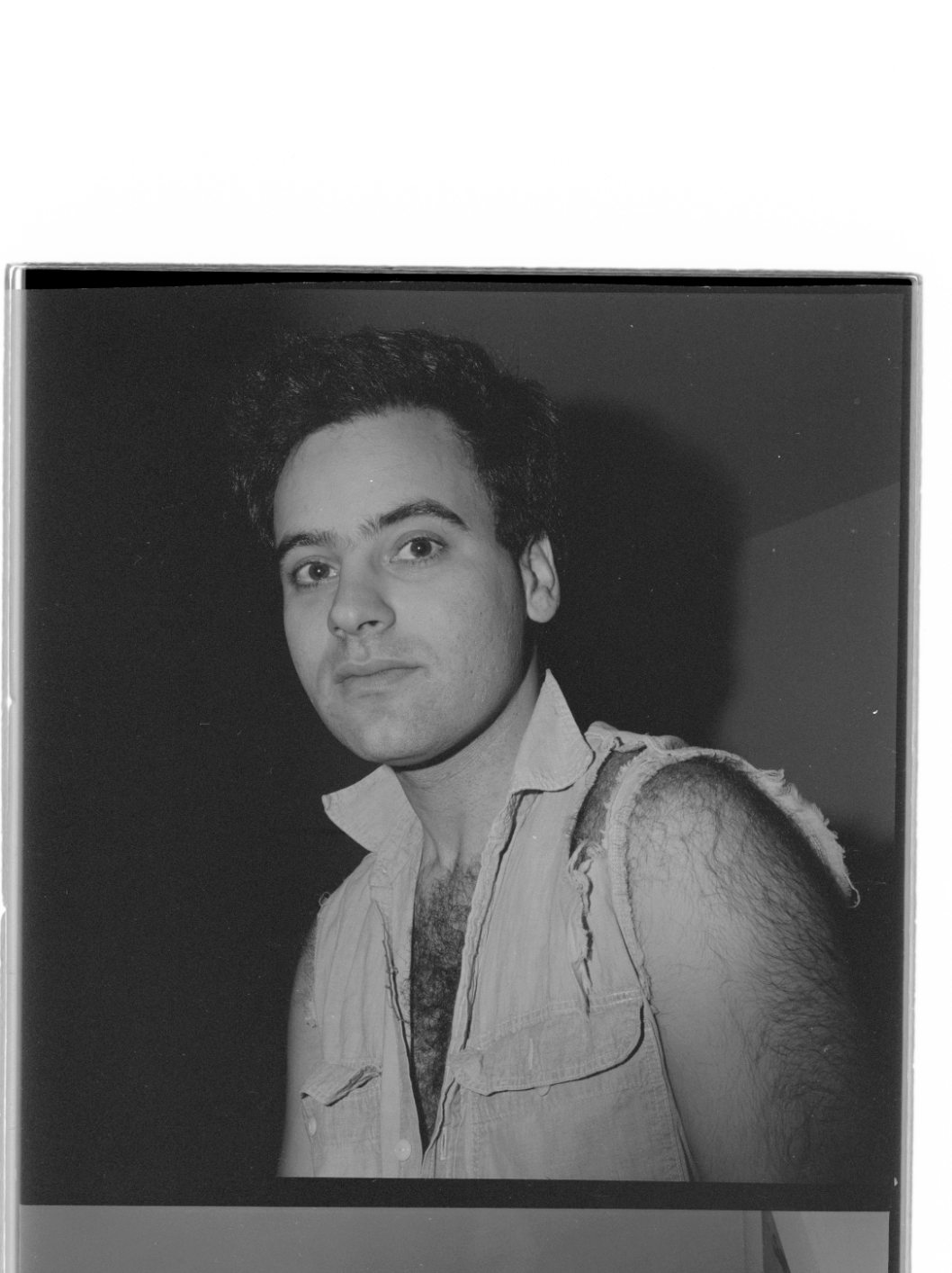
Copyright: Kirsten Bates, 1979
Amos was always a part of my New York life -albeit distantly in recent years- for his documentation of the 1968 Russian invasion of Czechoslovakia as a 19-year-old studying in Eastern Europe. My mother-in-law had left Bratislava to study in Rome in the 1930s, but her heart remained in the Czechlands. Poe’s courageous camerawork of invading Russian tanks was the stuff of legend in our world.
Much of the retrospective focus on Poe’s career centres around his mid 1970s ‘Blank Generation’ guerilla style scenes of upcoming singers Pattie Smith, Debbie Harrie, Iggy Pop and the Ramones. But Poe’s 1976 homage to Jean Luc Goddard in Unmade Beds is a masterful, lyrical satire, as if the camera is turned upon the viewer. Not that his artistic questioning was ever fully sated. His Alphabet City (1984) is a story of young mafia hoods caught in a morally compromising situation.
Poe’s lack of finance meant Unmade Beds had to be shot in sequence. With only one suit to his name, writer, director and actor Eric Mitchell (Underground USA) was knifed on camera in a fight scene at CBGBs by Cramps lead singer Lux Interior. Poe also used JFK Airport, the Chelsea Hotel, and the newly constructed World Trade Center as sets for his films. His unassailable confidence was an invaluable asset to his low-budget early screen work. A mutual friend, the artist Kirsten Baits remembers she and Poe crashing a private screening hosted for Martin Scorsese and Isobella Rosellini. “Amos could be shameless when he wanted to meet someone. But they ended up liking him. I think everyone thought someone else had invited him.”
Though Amos Poe was an instigator, co-conspirator and originator of the No Wave film genre, its definitions don’t always fit his work. As loosely shot and haphazardly recorded as they appear to be, Poe’s films tend to be intricately scripted in wildly ironic, culturally whimsical scenes that bring an untoward depth to the No Wave movement. His 1991 Triple Bogey tells the story of a family of orphans enjoying the fortunes of their elder sister’s literary success, living aboard the eponymously named cruiser, motoring around New York harbour. Failure is writ in an implausible plot twist with a spectacular denouement. One summer, before he’d properly begun making Triple Bogey, he told the writer Joel Rose in the July 1991 issue of Bomb Magazine; “So as not to go crazy, I took my old Super 8 out of moth balls, started shooting my kids… I started getting ideas and I wrote it as I shot. It became a game. If I went out in the car with the kids, I would say, “Oh, there’s a bank!” We would pull up and they would stand outside waving and I would take their pictures. My son, Nick, would turn around to some lady coming out, counting her money, and Nick would say, “My dad’s making a movie and we’re in it and we’re going to rob the bank!”
Though his colon cancer was Stage 4 when diagnosed in 2022, Poe was not to be prepared to go silently into the night. If anything, he wrote and shared more during the next three years than he had for some time. In his frequent Instagram posts, Poe mused upon the subjects close to his heart. His love for his children and his wife, the actor (Make Me Famous), and writer Claudia Summers was paramount. Importantly too as an Israeli born Jew, Amos Poe was unafraid to take a moral stand against the atrocities unfolding in the Gaza invasion. In a post titled ‘Holy Land’, Poe gathered insights from a wide field of contributors.
“The state of Israel was not created for the salvation of the Jews; it was created for the salvation of the Western interests. This is what is becoming clear (I must say that it was always clear to me). The Palestinians have been paying for the British colonial policy of “divide and rule” and for Europe’s guilty Christian conscience for more than thirty years.” - James Baldwin (1979)
“Genocide means not just mass killing, to the level of extermination, but mass obliteration to the verge of extinction.” - Christopher Hitchens, Hitch 22: A Memoir
“The first time it was reported that our friends were being butchered there was a cry of horror. Then a hundred were butchered. But when a thousand were butchered and there was no end to the butchery, a blanket of silence spread. When evil-doing comes like falling rain, nobody calls out “stop!” When crimes begin to pile up they become invisible. When sufferings become unendurable the cries are no longer heard. The cries, too, fall like rain in summer.” - Bertold Brecht
Amos Poe’s eloquent soul searching was confronting and comforting. In his articulate inquiry, his feelings were continually on display. His ‘Lying Down Diaries’ (as I’ve titled them), are beautiful, hilarious and searingly honest. Shortly before he died, he wrote of the summer he arrived in the US as an eight-year-old immigrant with no English and a lot of time on his hands. Consigned to his relatives’ basement in Queens, Poe watched endless Elvis Presley movies, taught himself English and how to dance. His wry self-effacement is one of the keenest aspects of his spiritual and artistic authenticity.
“I want to be what you saw in me.” – Banksy
To a greater extent, the incredible self-inventive story of the globally influential 1970s and 80s downtown New York arts scene lies in the diaristic memoirs of some of the district’s surviving creatives. The lives of the artists, writers, musicians, and filmmakers who lived in the sparsely populated lower Manhattan region below 14th Street are histories yet to be told. To have lost one of the era’s most steadfastly engaged cultural figures, is to lose another part of the story of our artistic heritage. Amos Poe will be sorely missed.